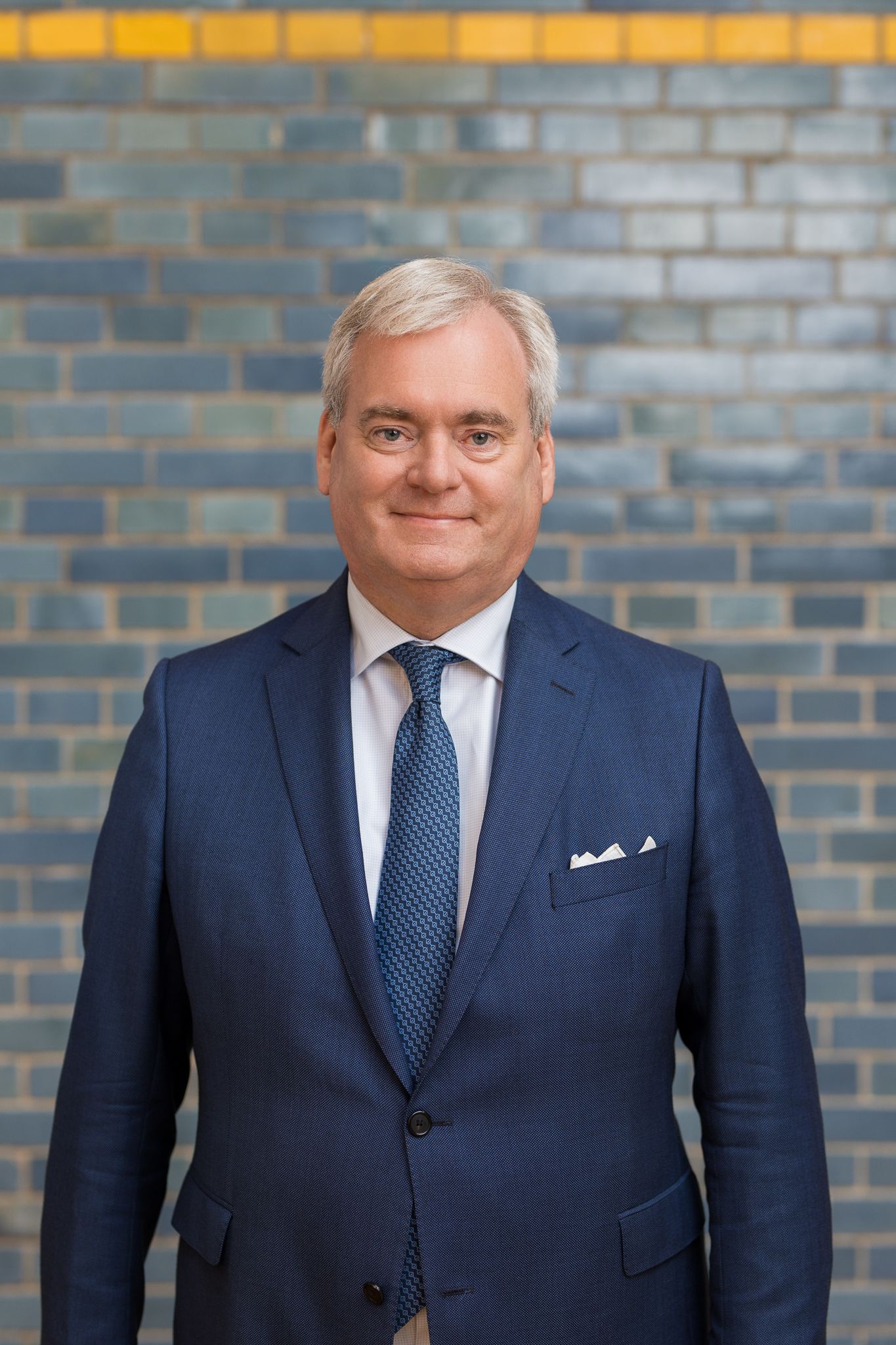
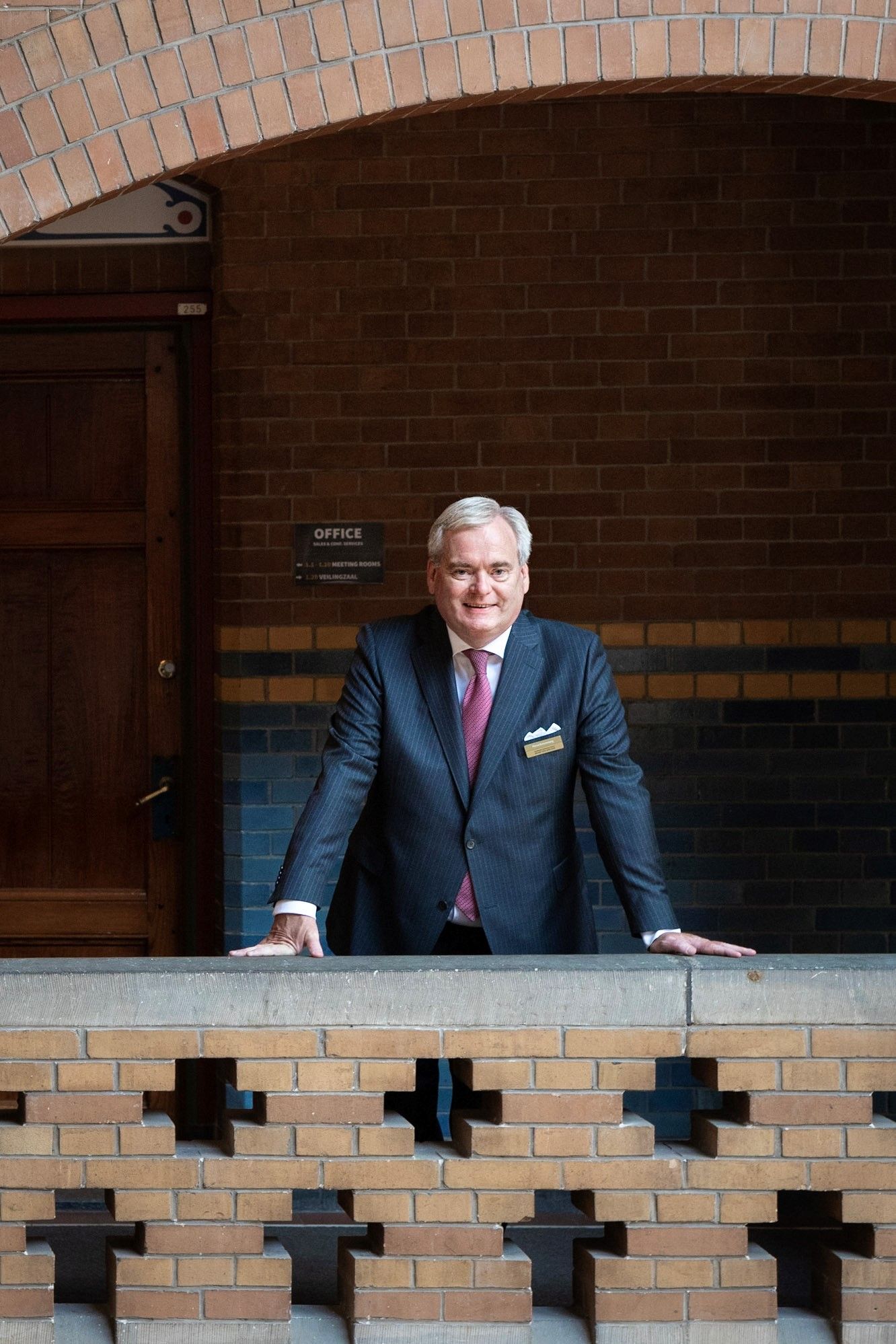
'Tomorrow must always be better than today.' The Beurs van Berlage entered 2026 at full pace, time to take a moment for reflection with Managing Director Marcel Schonenberg. In this interview he looks back at his seventeen years at the Beurs, and what is yet to come.
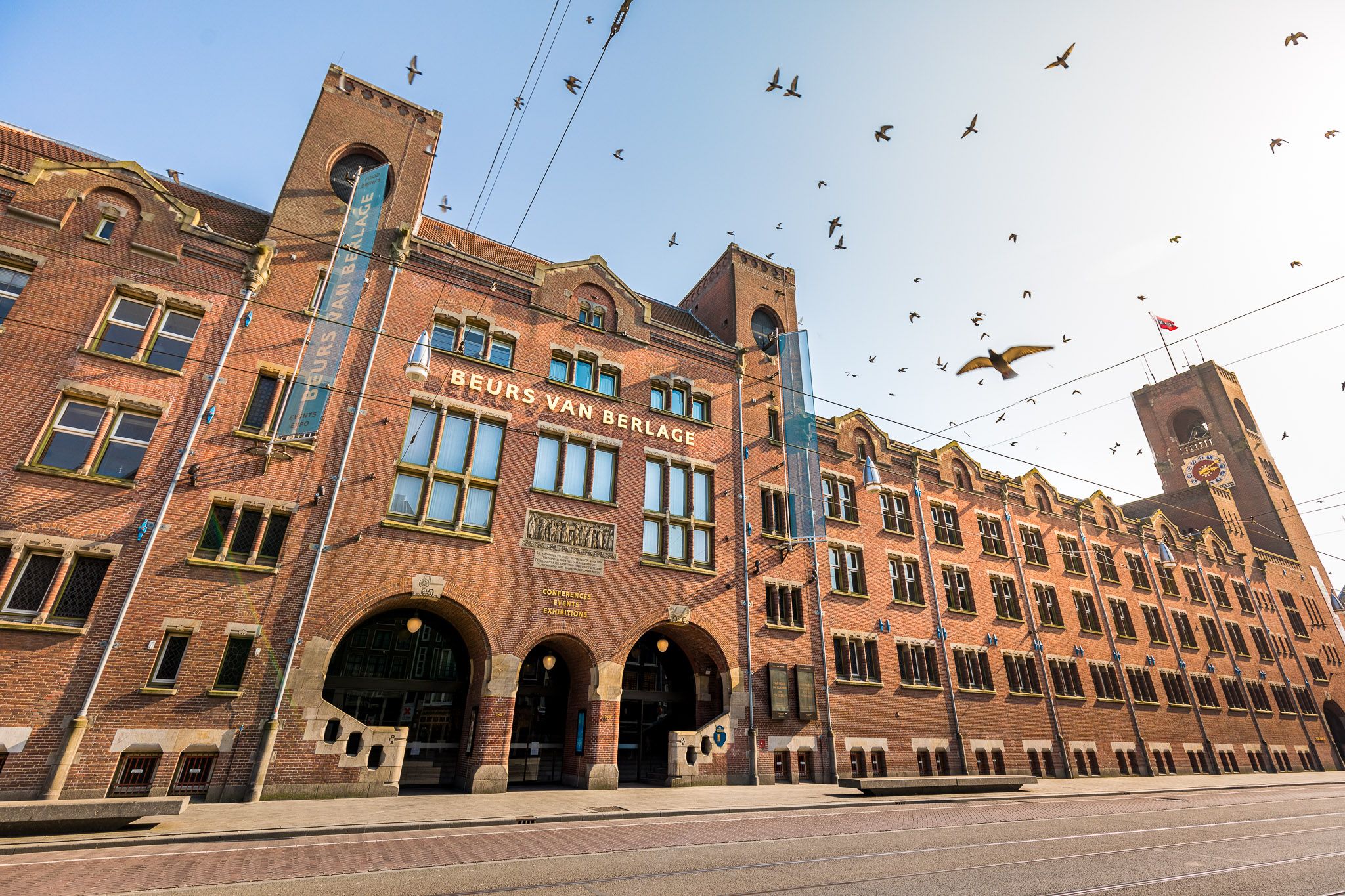
From a historic building with a dream location in Amsterdam, but without clear purpose, to one of Europe’s most sought-after congress destinations: the transformation of the Beurs van Berlage is inseparable from the vision of the people who shaped it. Marcel Schonenberg joined the organisation in 2009, when the building was just privatised. Seventeen years later, he leads a bustling meeting place that opens its doors to international conferences as well as local events for the citizens of Amsterdam and its visitors. A purpose rooted in the philosophy of its architect, yet firmly oriented towards the future.
To reshape such an iconic building in a unique location, sounds like a great opportunity to many. What brought you to the Beurs van Berlage?
‘After two decades in the leisure industry, I was asked to redevelop the Beurs van Berlage just after it was privatised by the municipality. It almost felt surreal. Both my parents were born in Amsterdam and had their first jobs very close to this building. With my ‘Amsterdam’ blood, working in the heart of the city, felt, and still feels, like a tremendous treat.’
What was your first impression of the building, and its potential?
”As a child, I once sneaked into the main hall during an exhibition visit. Although I was sent away immediately, it made quite the impression. That same feeling returned when I walked back in so many years later. The large halls and the pure architecture without frills, yet with impressive artworks.
When I started in 2009, the Beurs had just been privatised. It had previously been owned by the municipality of Amsterdam and was operating at a loss. New shareholders had been brought in, and the building was made available for redevelopment.
The first step was to truly ‘read’ the building, and to understand the philosophy of the architect, H.P. Berlage. The essence lies in the three exchanges: large halls surrounded by galleries and additional spaces. From a commercial real estate perspective, you might say you could build additional floors in those ‘atriums’ to create more commercial space. But once you understand the building and its value, you would never do that.
We were already renting out rooms, so we continued. Over time, we came to realise that this function suited the building best. When we decided to focus on international multi-day conferences, everything fell into place. From renting out rooms, we developed into a full-service conference and event centre that caters to every need and that is known for its exceptional hospitality and class.
During the construction, Berlage once said that he believed capitalism would not last forever and that he hoped the building would eventually serve as a meeting place for people, a ‘palazzo pubblico’. That is ultimately what we are: a palace for public personal encounters.
‘…the converstation during a coffee break might sometimes be more important than what happens on stage .’
When you started at the Beurs van Berlage, it’s future was wide open and yet it needed to find a new purpose in the city. What was your mission?
‘The preservation of the national monument, that is where it starts. And that is where our commercial activities come in, they allow us to maintain this monument for the future. We take that responsibility seriously, we must. The building deserves it.
But I also knew it is not just about the building. At the end of the day, it is about the people that visit and the people that welcome them. Our mission has always been to create a venue with class and genuine hospitality. Hospitality from the heart, that recognises guests’ every need. We are here to make every meeting within this monument unforgettable.
In an increasingly digital world, human encounters are becoming more and more important. Offering that in such an extraordinary place, in the heart of Amsterdam, that is what we see as our mission.’
In those seventeen years, what have been the defining turning points in the development of the Beurs van Berlage?
Firstly, it was the strategic choice itself: to develop into a conference centre. As a listed monument, realising all the necessary alterations and installing state-of-the-art facilities was not an easy feat.
Secondly, as for many in our industry, the pandemic was a defining moment. We were briefly afraid that everything would become digital and virtual, and we seriously considered that our role as we knew it might be over. We were even making plans for significant strategic changes.
But reality proved the opposite. In a digital world, we believe physical encounters are only becoming more important; and Covid only made many more people acknowledge that.
What has also been remarkable is how consistently we have grown. There now seems to be a next phase where that growth is accelerating. For 2026, we already have five congresses that normally rotate locations throughout Europe, and they have told us: “we’ll stop searching, because there is nothing better. We’ll simply come back.”’
There are many influences and trends in the events industry, like Covid, that call for constant adjustments. How has the role of a conference venue changed over the past decade?
‘The quality of the spatial environment and the overall experience are playing a much greater role. There is growing interest in catering, variation and sustainability.
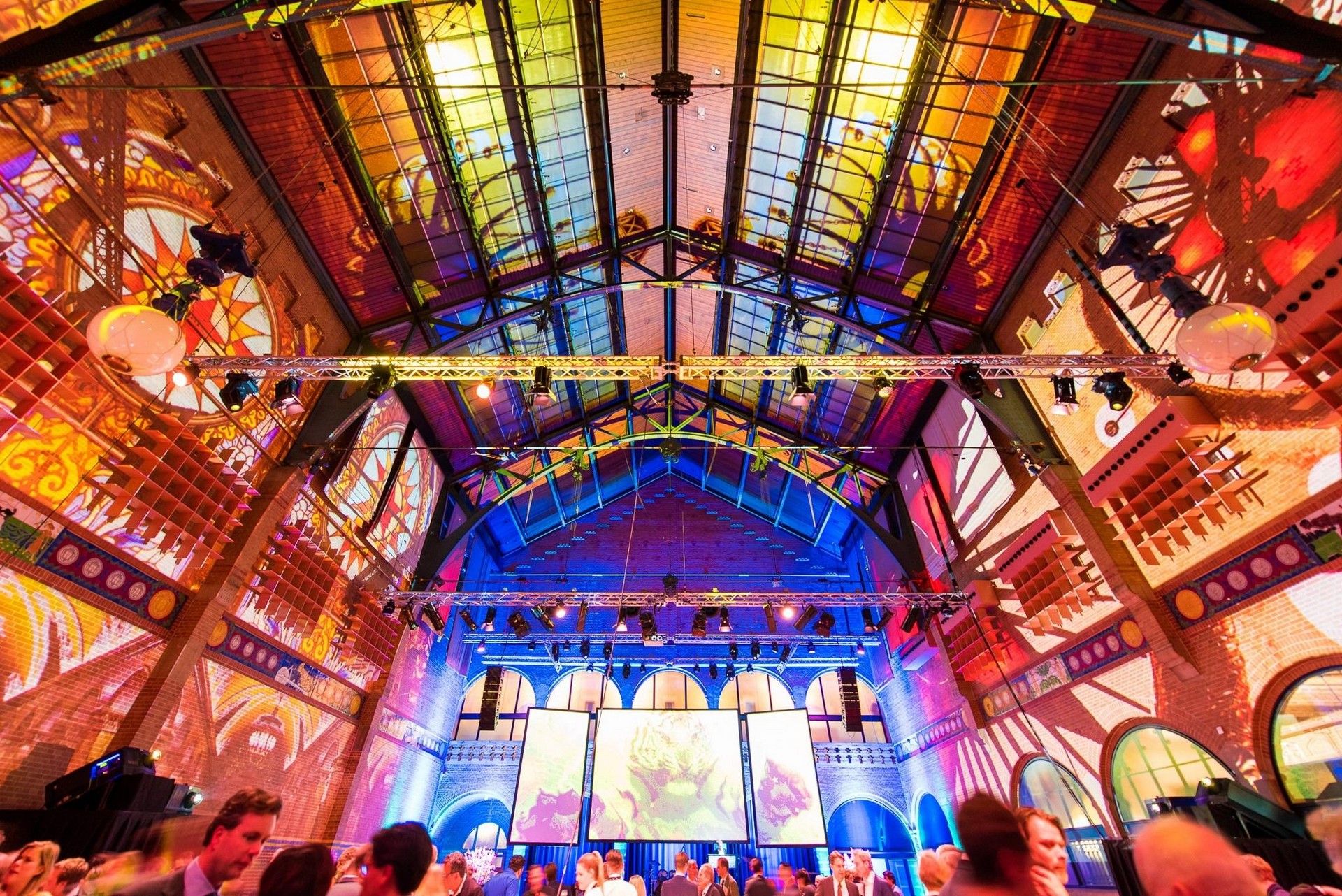
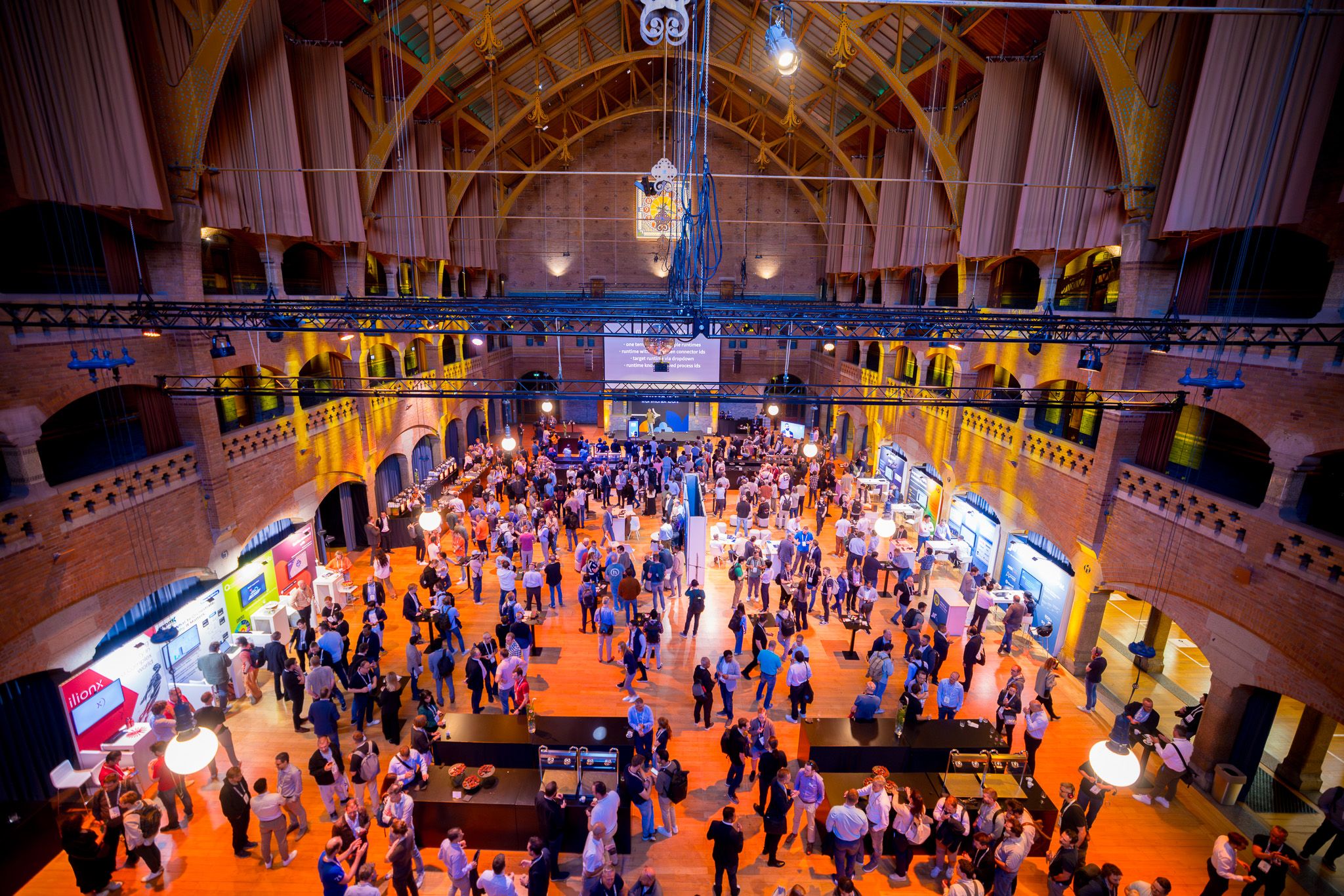
The market now openly acknowledges that the conversation during a coffee break might sometimes be more important than what happens on stage. We facilitate those moments between sessions, by creating additional spaces, corners, lobbies and work areas. There is a clear shift away from moving from one plenary session to the next, towards more diverse programmes where experience plays a central role.
Every conference or event is a community. There is nothing better than standing on the floor at the start of a congress and seeing people greet each other like long-time friends. What happens here is, in a sense, an explosion of knowledge and experience.
We also try to make the idea of “legacy” more concrete: what remains after a congress? We are working more actively on connecting that knowledge to the local community, together with our partners in the city.’
When we look at 2026, where does the Beurs van Berlage stand today?
‘It is going very well. We are a financially healthy organisation. We generate a strong profit and reinvest it in the company and in the preservation of the monument.
The secret lies in our USPs: a national monument with a unique atmosphere, combined with state-of-the-art technical facilities, a city-centre location, and 4,500 hotel beds within walking distance.
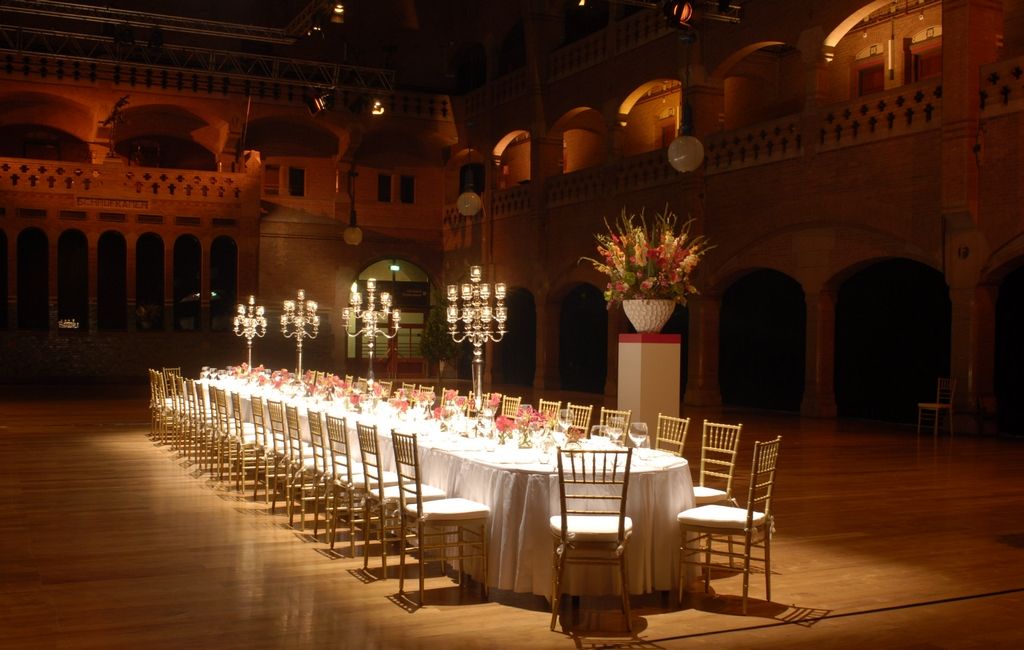
We are very consistent in our market approach. We may not be the cheapest venue, clients tell us that our prices match our premium quality in a unique location. We want to be the five-star hotel of the MICE market, without the beds. Although, we can even arrange that, through our hotel-level services as part of our full-service approach.
We have grown from simple room rental into what the Beurs van Berlage is today. It is the complete concept.’
‘The best part of my job is walking into an event and, within three seconds, feeling whether it is right.’
What do you see as the biggest challenge in the years ahead?
Notwithstanding the growing need for human interaction and interpersonal understanding, the world is becoming increasingly digital. We believe in hybrid events as a way to extend the reach of the knowledge shared here, but the market is not fully ready yet. Hybrid essentially means organising two events in parallel. I would like us to play a role in guiding the market towards hybrid formats, while keeping the physical meeting firmly at the core.’
And which choices will define the next chapter of the Beurs?
‘We have been working for over a year and a half on a new strategy in which we want to become better, more successful and broader. We are well on our way to reach our goals.
We want to further develop our position in the MICE market. And one principle remains engrained: tomorrow must always be better than today.’
After seventeen years, what are you most proud of? What motivates you?
‘When we started, we were a small organisation that had just come out of a merger. Our current DNA of exceeding expectations did not yet exist. I pushed that sense of service and hospitality through quite firmly. Now it is embedded in everything we do.
The best part of my job is walking into an event and, within three seconds, feeling whether it is right. When you see colleagues hard at work and you think: yes, that is where it happens, that is a joy. I truly enjoy every day at the Beurs. It makes me so proud of what we, as a team, have accomplished.