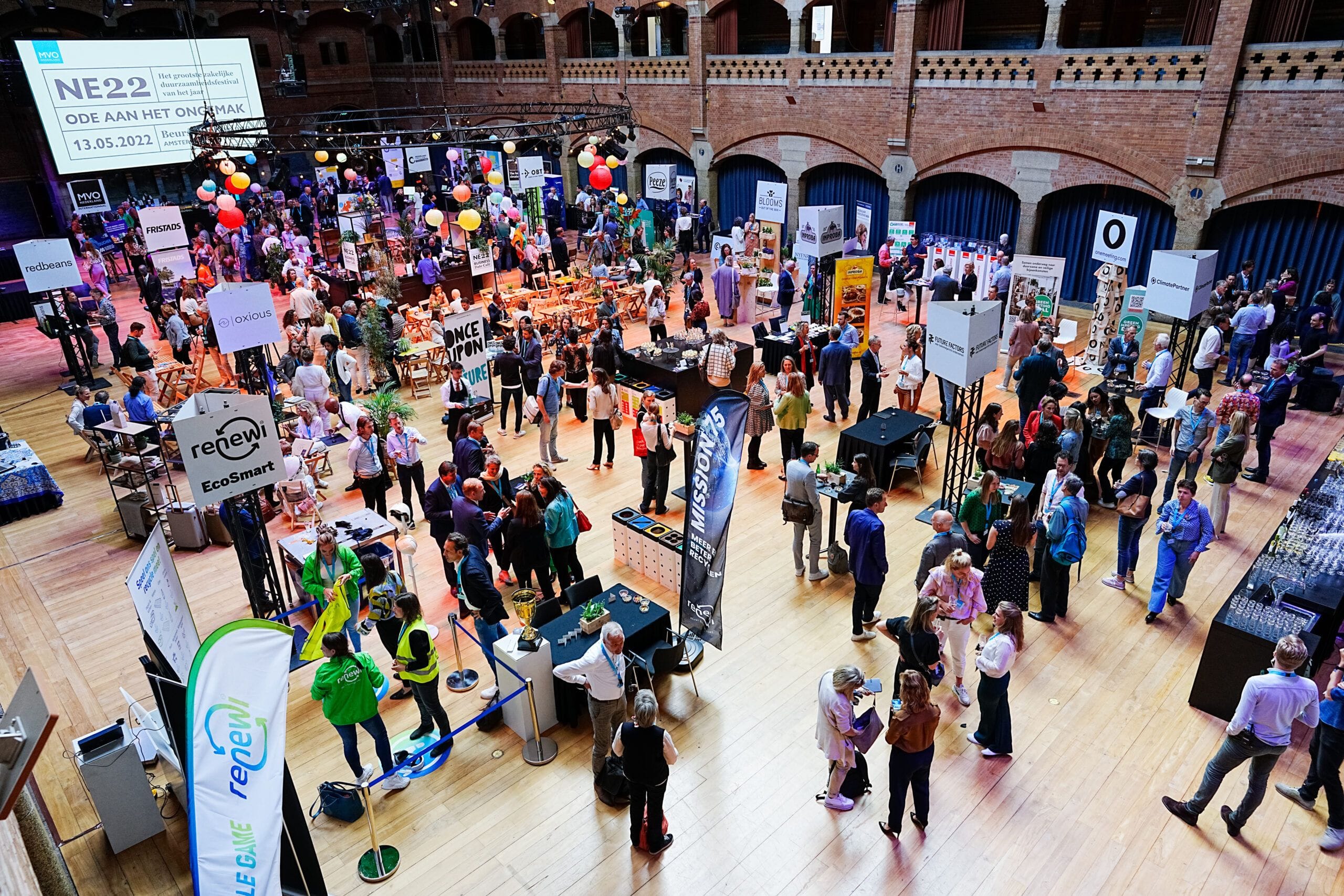
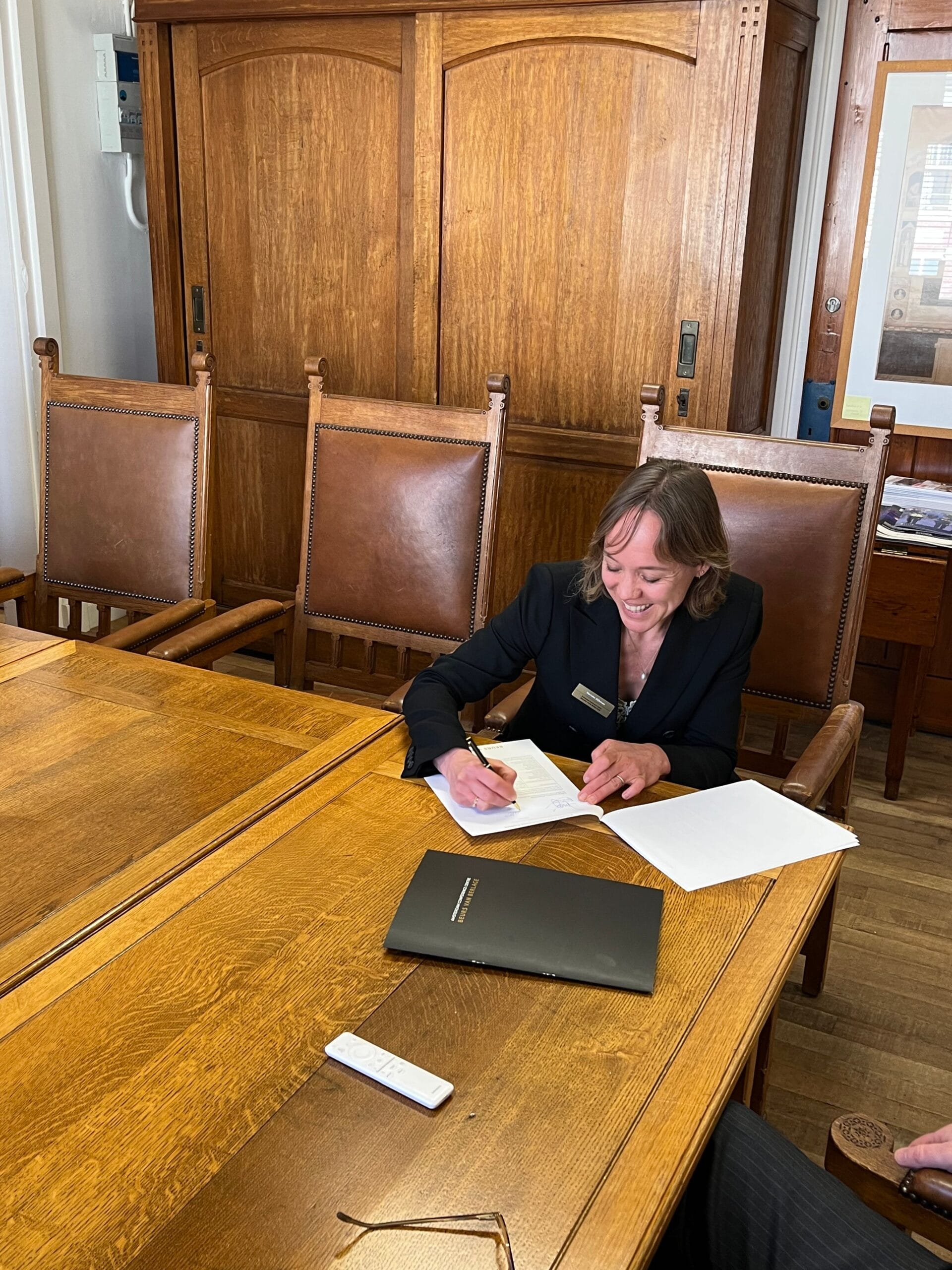
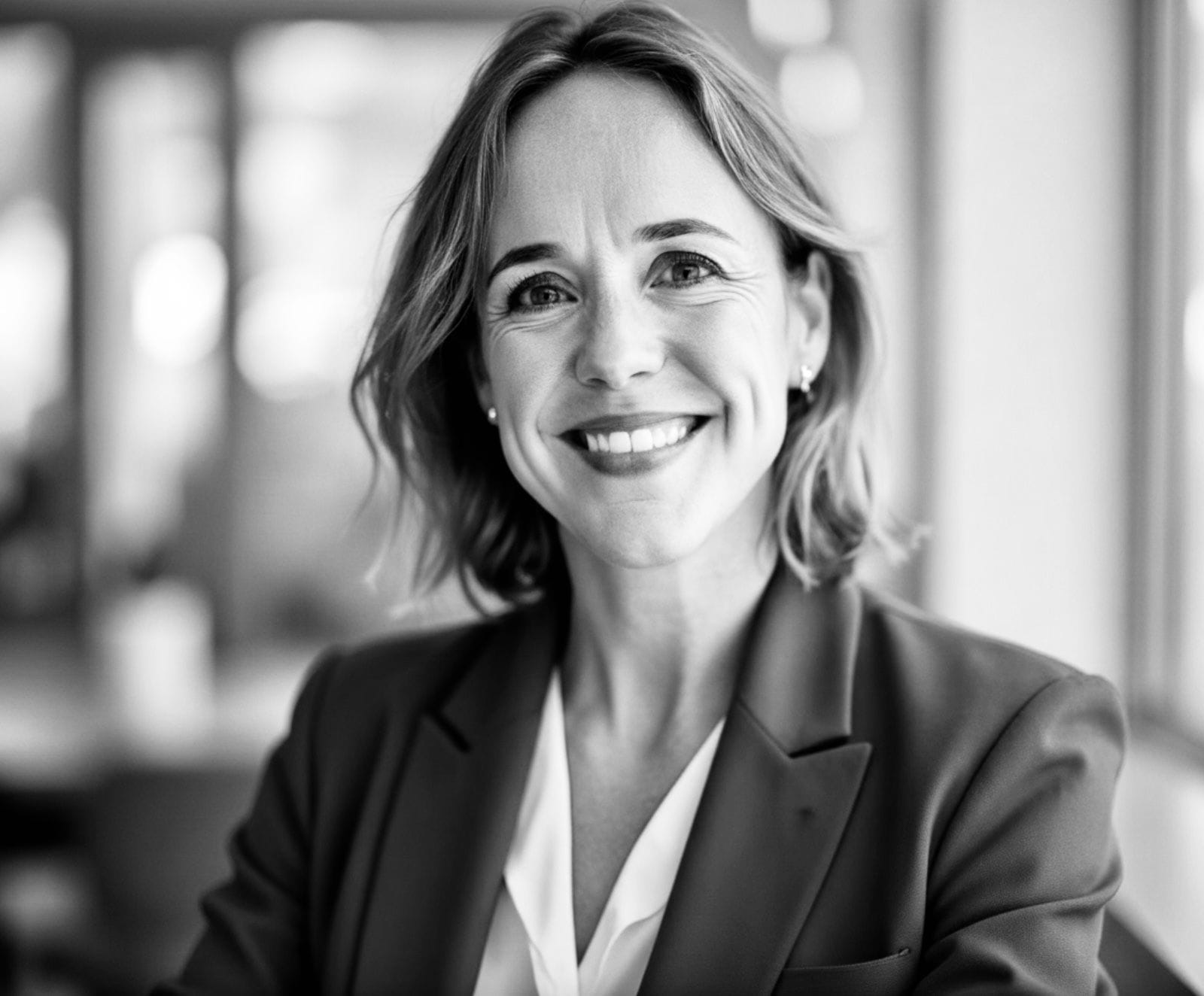
As an iconic listed building in the heart of Amsterdam, the Beurs van Berlage feels a sense of responsibility towards the city, its residents and future generations. Sustainability is not a standalone marketing narrative, but is embraced by the entire organisation. Whilst international conferences and high-end corporate events held within our walls strive for maximum substantive impact, the Beurs van Berlage ensures that events have an ever-smaller environmental footprint. The specific goal is to achieve a climate-neutral Beurs van Berlage by 2050. To drive this transition forward, Marieke Dijkman was appointed last April. As the organisation’s first Sustainability Manager, she guides the sustainability strategy by taking the lead on sustainable projects, encouraging innovation and engaging the team in the sustainable transition.
The role of Sustainability Manager is new at Beurs van Berlage. What made you say: this is what I want to dedicate my career to?
‘In the publishing industry, I became increasingly involved in social impact initiatives. I worked on greener publishing practices, CSR policies, and projects with authors and organisations that placed sustainability and social impact at the centre of their work. Over time, I realised that I no longer wanted this to be just one aspect of my job, but its very core. What immediately appealed to me about this role is that, at Beurs van Berlage, sustainability is not a marketing story but a genuine ambition to take responsibility. That aligns with the organisation’s DNA: international, forward-thinking, and deeply connected to society.
I also enjoy pioneering and building something from the ground up. In my previous role, I led a department overseeing four brands, and it is precisely the process of developing new initiatives and bringing people along through change that energises me. This position brings everything together for me: strategy, impact, and the opportunity to build something new.’
Many organisations identify sustainability as a priority, but Beurs van Berlage has now created a dedicated role for it. Why was this step necessary?
‘With this role, we are demonstrating that sustainability is not a standalone project, but a strategic part of the organisation as a whole. A great deal was already happening within Beurs van Berlage, but by assigning a dedicated role to it, we are creating focus, alignment, and momentum. It gives the subject ownership and continuity.
This aligns with our vision, Leading the Change: taking responsibility for the future and acting on it. After all, you don’t build a dike in the middle of a storm; it is a matter of anticipating what lies ahead. The time to act is now.
To me, sustainability is not about something you ‘have to do’, but about how you future-proof your organisation and how you can create a little more impact every day. Or, as a Chinese proverb says: ‘Many drops make a river.’
“To me, sustainability is not about sacrifice or being lectured, but about organising things more consciously and intelligently. When approached in the right way, impact, quality, and commercial success actually reinforce one another.”
International conferences create invaluable opportunities for knowledge sharing and connection, but they also come with a significant environmental footprint. What does sustainability mean for Beurs van Berlage in day-to-day practice?
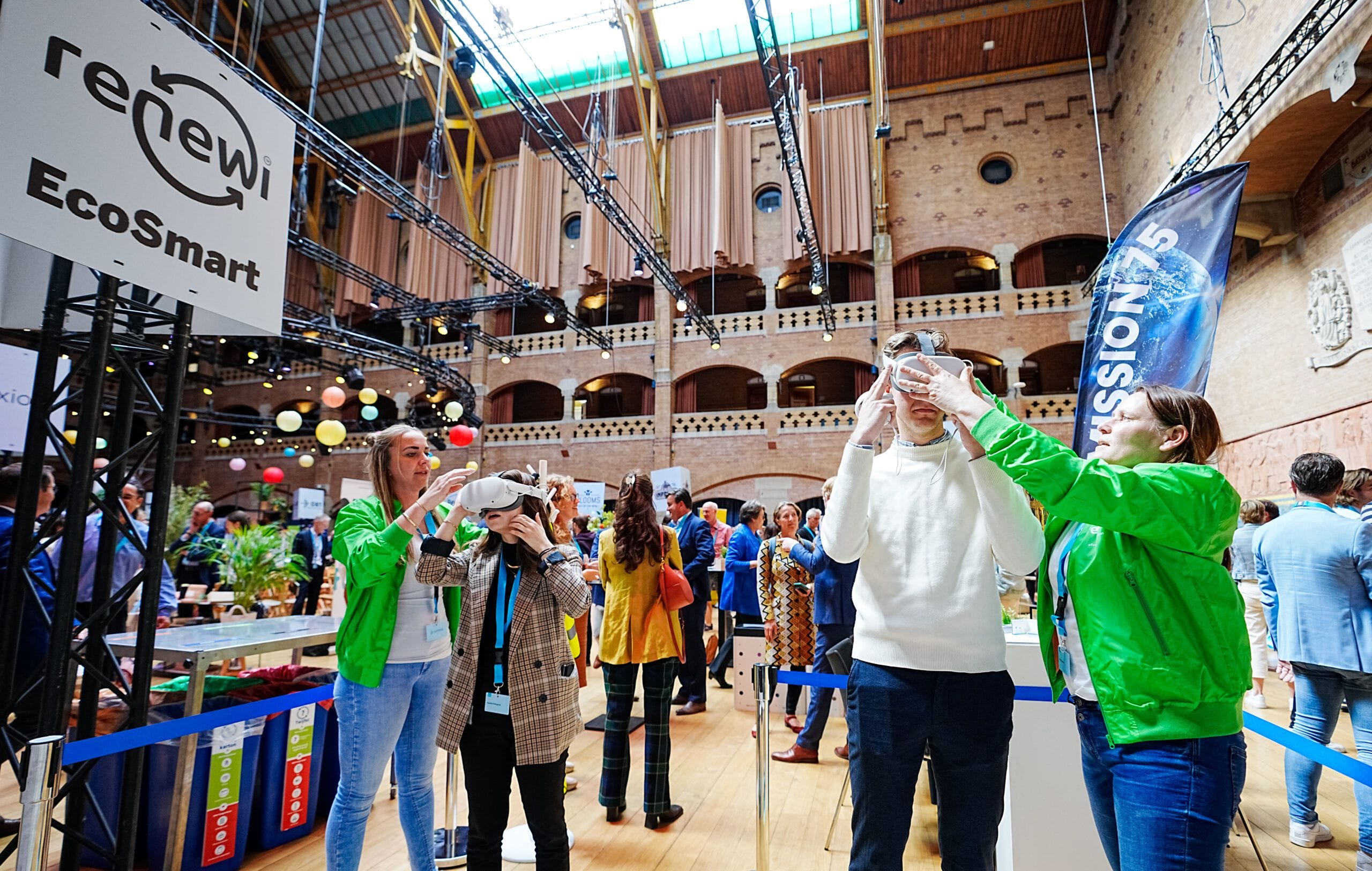
‘It is all about creating positive impact on three fronts: environmental impact, social impact, and internal impact. From an environmental perspective, my focus includes structurally reducing food waste, transitioning from bottled mineral water to tap water, enhancing our waste and recycling infrastructure to significantly reduce residual waste and maximise resource recovery, driving behavioural change, and advancing a more circular strategy across the organisation. I also want to take a critical look at our supply chain and circular exhibition construction: logically, what we do not purchase, we do not have to process either.
As a historic landmark in the heart of Amsterdam, we also want to continuously explore how we can contribute more to the city and its residents. Internally, we are strengthening our organisation through our B Corp certification, which we aim to achieve later this year.’
Many decision-makers in the corporate market still believe that sustainable choices come at the expense of quality, comfort, or commercial returns. What is your perspective on that?
‘I actually see the exact opposite. Sustainable choices force you to take a critical look at what you do and why you do it. In practice, this often leads to smarter processes, less waste, and ultimately higher quality. It also gives you greater insight into your own organisation and supply chain, enabling you to make better-informed decisions and uncover new commercial opportunities.
That said, I’m certainly not a moral crusader; I don’t believe in lecturing people, and I’m far from perfect in my own private life as well. For me, it’s not about perfection, but about progress. Every step forward counts. Sustainability is not about sacrifice, but about organising things more consciously and intelligently. When approached in the right way, impact, quality, and commercial success actually reinforce one another. Sustainable investments are often financially viable as well and tend to pay for themselves over time.’
Looking ahead to the coming years, when would you consider your role to have been a success?
‘What drives me is the conviction that real change is possible. Everywhere I look, I see small initiatives that demonstrate there is another way. Everything we need already exists on a smaller scale. If even a quarter of this undercurrent reaches the mainstream, a tipping point can be reached and the transition can accelerate rapidly, as Jan Rotmans, Professor of Transition Studies and Sustainability, describes.
I am also deeply interested in the intersection of behaviour, communication, and change management. That is where change becomes tangible. I enjoy turning ideas into practical actions and ensuring they lead to real improvements on the work floor.
My daughters are a major source of motivation. They add a sense of urgency to everything I do. I want to contribute to a world that is a little better and fairer, because they and their generation will be the ones most affected by the consequences of climate change.
Of course, this is not something you do alone, but together with colleagues, suppliers, organisers, and visitors. Over the coming years, I want not only to implement sustainable improvements within Beurs van Berlage, but also to actively contribute to creating a blueprint for the wider industry. By sharing valuable knowledge, showcasing best practices, and openly driving the conversation around sustainable events, we can strengthen our role as a thought leader.
For me, the mission will be accomplished when sustainable thinking becomes second nature in the way we work and make decisions — both within Beurs van Berlage and far beyond.’